
Participation shifts mindset
Packing a bottle changed waste from something to discard into material participants could transform.

EcoCraft is a working circular-economy pilot that helps communities turn clean, dry plastic waste into ecobricks through hands-on learning, local participation, and measurable fieldwork.
Verified pilot evidence
The figures below come from the EcoCraft internship report and proposal. They describe only the completed six-week field pilot—not projected platform-scale impact.
Completed and documented
Hands-on methodology
Engaged directly
With nearby students
In the pilot area
June–mid-July 2026
Current status: The self-initiated pilot is complete. The ecobricks are documented and ready for the next milestone: assembly into functional community furniture.
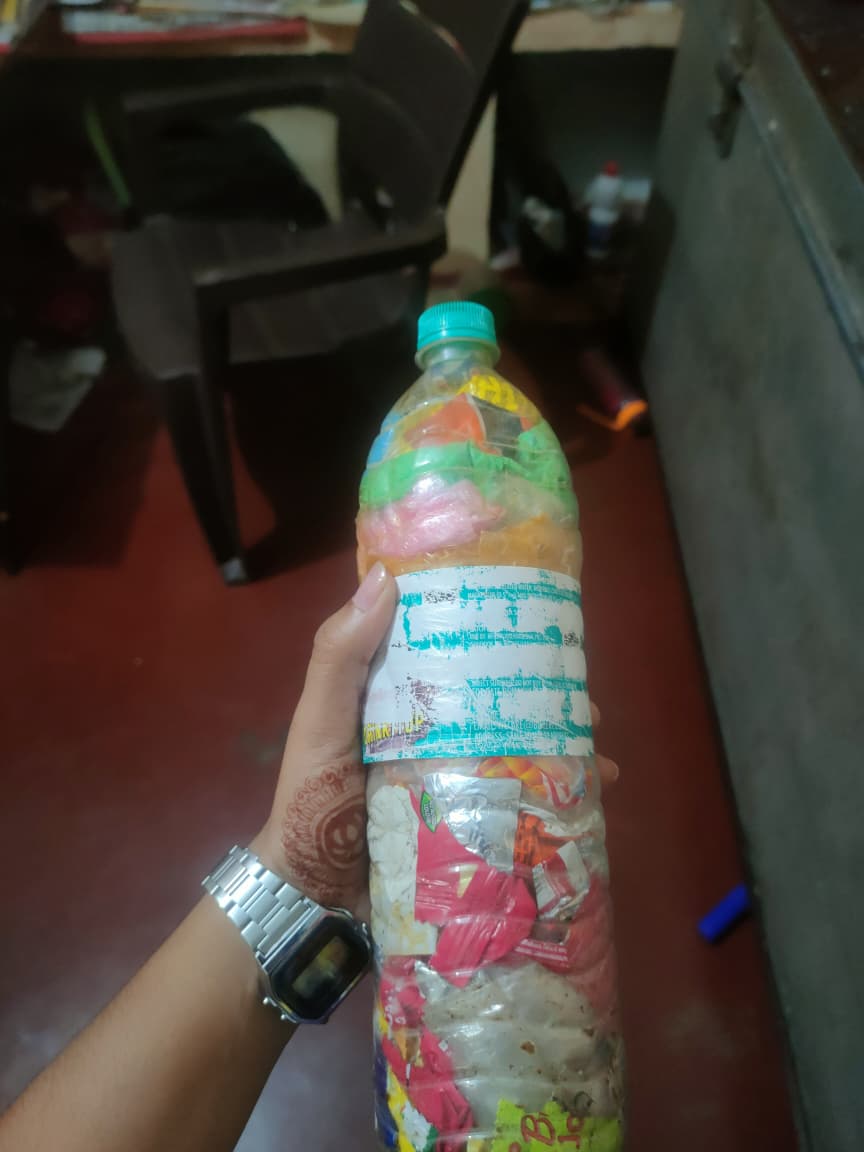
A real ecobrick from the field pilot
Photographed during the June–July 2026 work
The core intervention
An ecobrick is a reused PET bottle densely packed with clean, dry plastic. The method makes an abstract waste problem tangible: roughly 10 litres of loose plastic can be compressed into a single 1-litre bottle.
Clean & dry
Pack tightly
Build & reuse
The pilot selected ecobricks because the method is accessible without specialist equipment, creates a visible artifact, and can support future benches, planters, and community furniture.
How it was carried out
The work used participatory design: communities were co-creators, not recipients of a pre-designed campaign.
Field visits and informal conversations mapped local disposal habits, stakeholder concerns, and practical barriers.
Sessions with women’s groups and students connected everyday dry waste with visible local consequences.
Participants learned to separate clean, dry plastic and tightly pack it into reused PET bottles.
Community participation produced 10–15 physical ecobricks and a photographic record of the process.
Findings were synthesized into a CSR proposal; furniture assembly is the next visible milestone.
Field documentation
Real photographs and videos record participation across community groups, students, sanitation workers, local representatives, and project management.
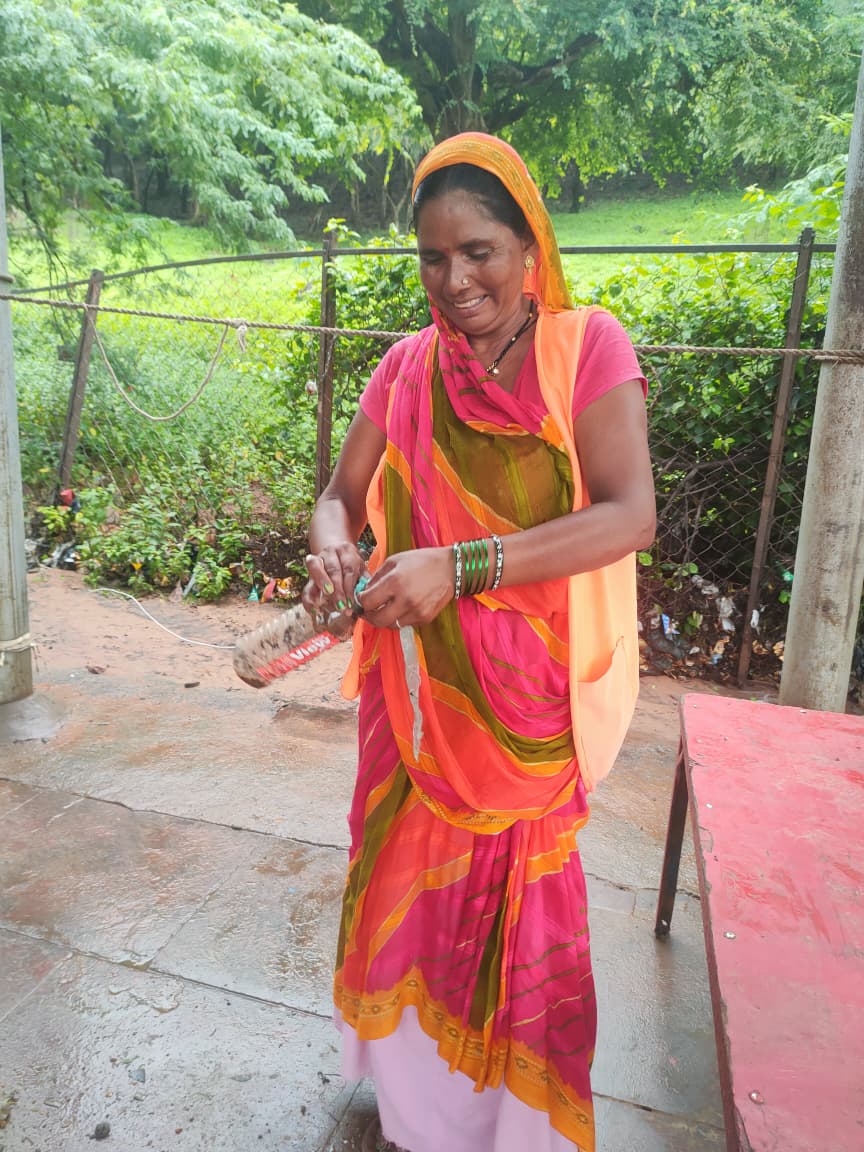
A local sanitation worker prepares a reused bottle during hands-on ecobrick activity.
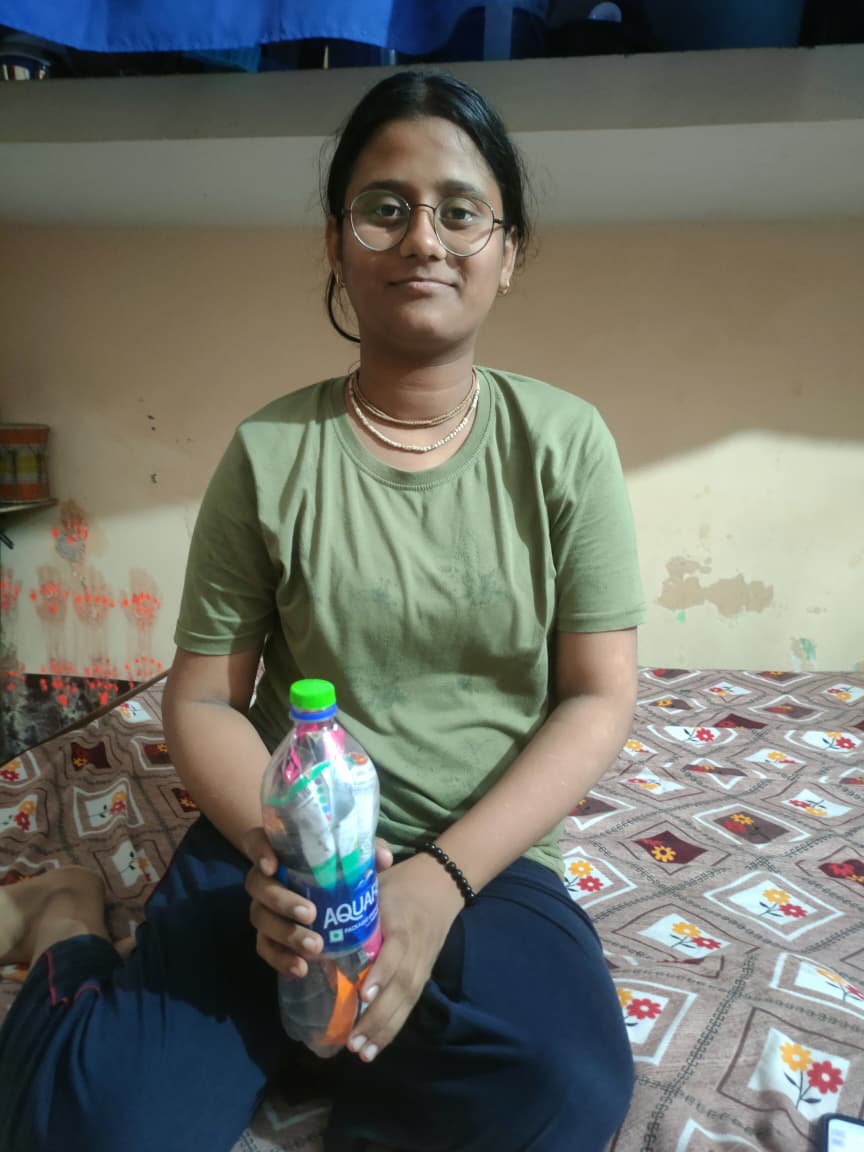
A local student holds a bottle packed with recovered plastic.
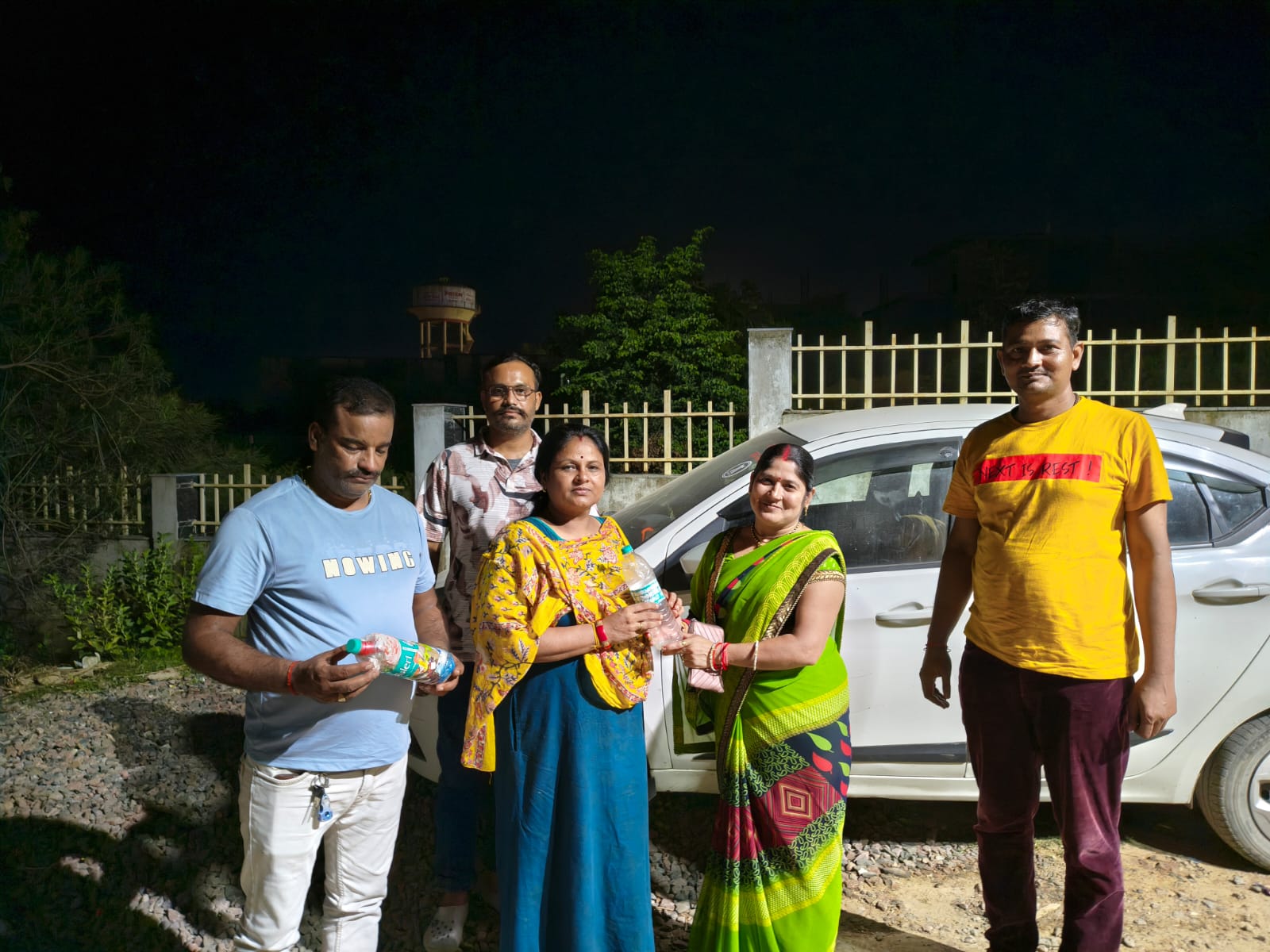
Local residents and public representatives engage with the bottle-based intervention.
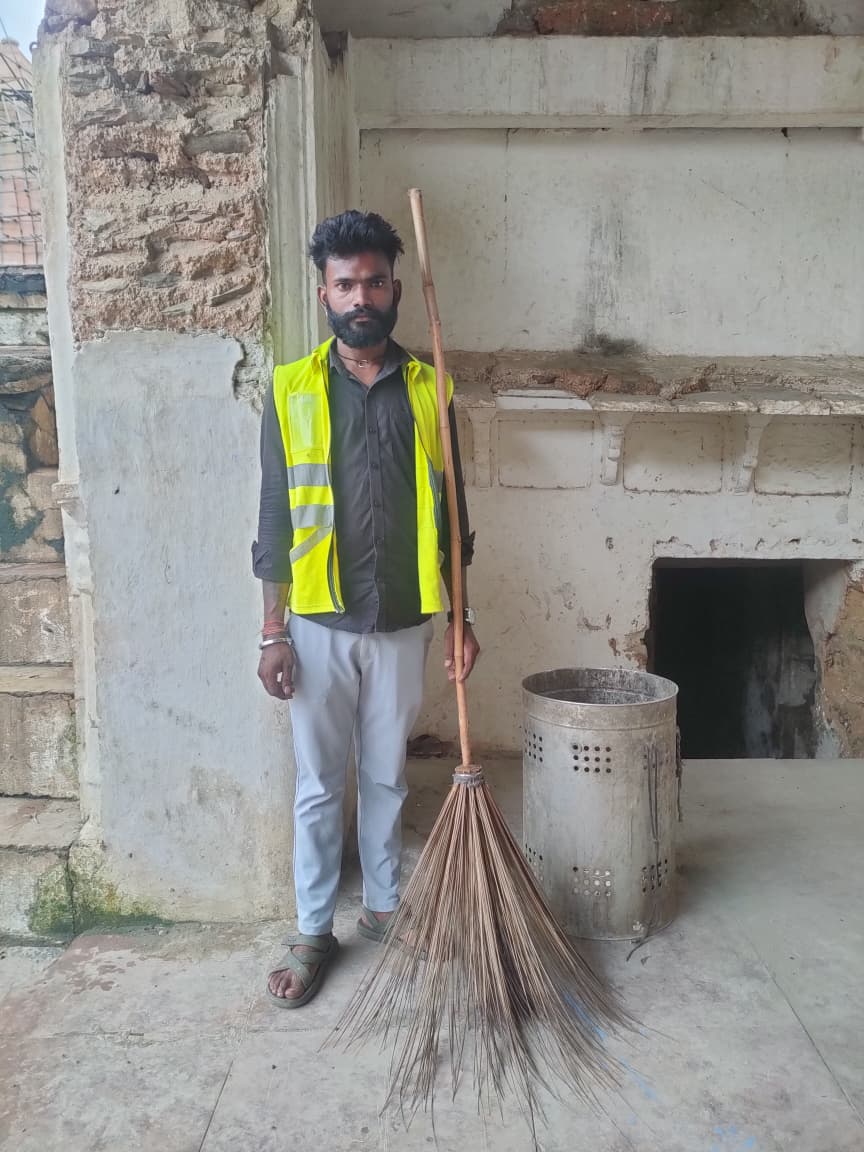
Field engagement included the people who manage waste in everyday public spaces.
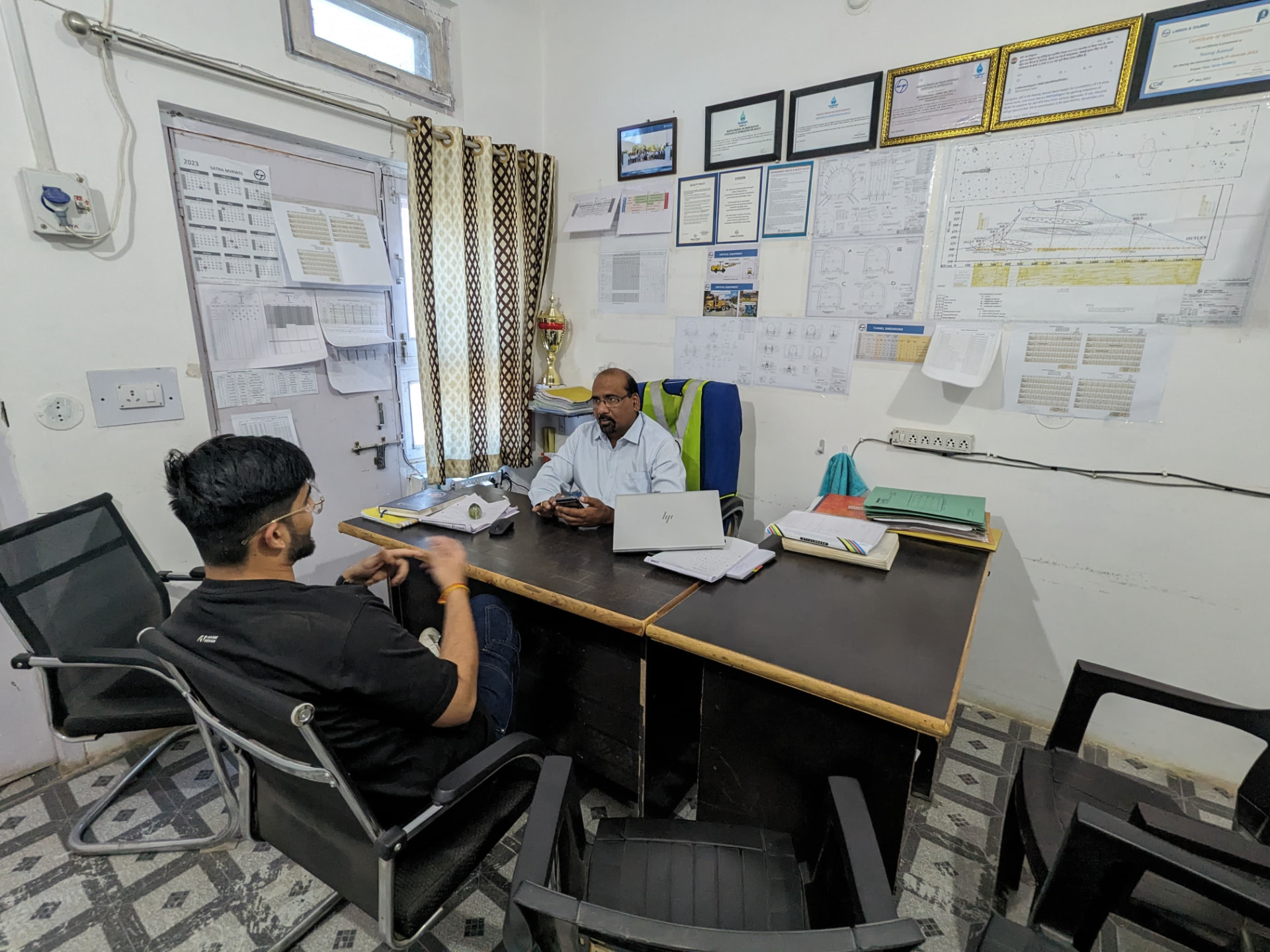
The documented pilot and scaling proposal were discussed with project-site management.
What the research found
Packing a bottle changed waste from something to discard into material participants could transform.
Women’s groups were central because they manage household waste and can sustain habits within neighborhoods.
A finished ecobrick made circular economy ideas concrete, visible, and emotionally understandable.
Mapping the pilot to CSR categories created a realistic route beyond a one-off activity.
Research principle
Credibility came from separating what was proven—physical ecobricks and real participation—from what remains a future concept.
Learning center
DIY inspiration
These reference projects show possible reuse pathways. They are inspiration for the pilot’s next furniture milestone, not completed EcoCraft outputs.

Seating and tables assembled from packed bottles.

A visible reuse idea for recovered PET bottles.

Ecobricks and bottle ends used in planted spaces.

Packed bottles arranged to hold soil and plants.

Bottle bottoms incorporated into a built surface.

A bottle core transformed with padding and fabric.


A phased, low-risk path
Self-funded fieldwork, awareness sessions, training, and 10–15 completed ecobricks near Satna.
A jointly scoped partnership with a workmen colony, 2–3 nearby schools, and women’s groups. Targets remain to be agreed.
Create furniture and utility items, measure adoption, train local champions, and document a model for other project sites.
Concept stage
These ideas express where EcoCraft could grow after field validation, partnership, measurement, and responsible implementation.
A point-and-scan educational prototype.
Future tracking for ecobricks, participation, and waste diverted.
A possible channel for products created through future pilots.
Potential challenges, recognition, and learning tools after validation.
Full documentation
Review the methodology, field findings, partnership proposal, and recommendations for scaling.